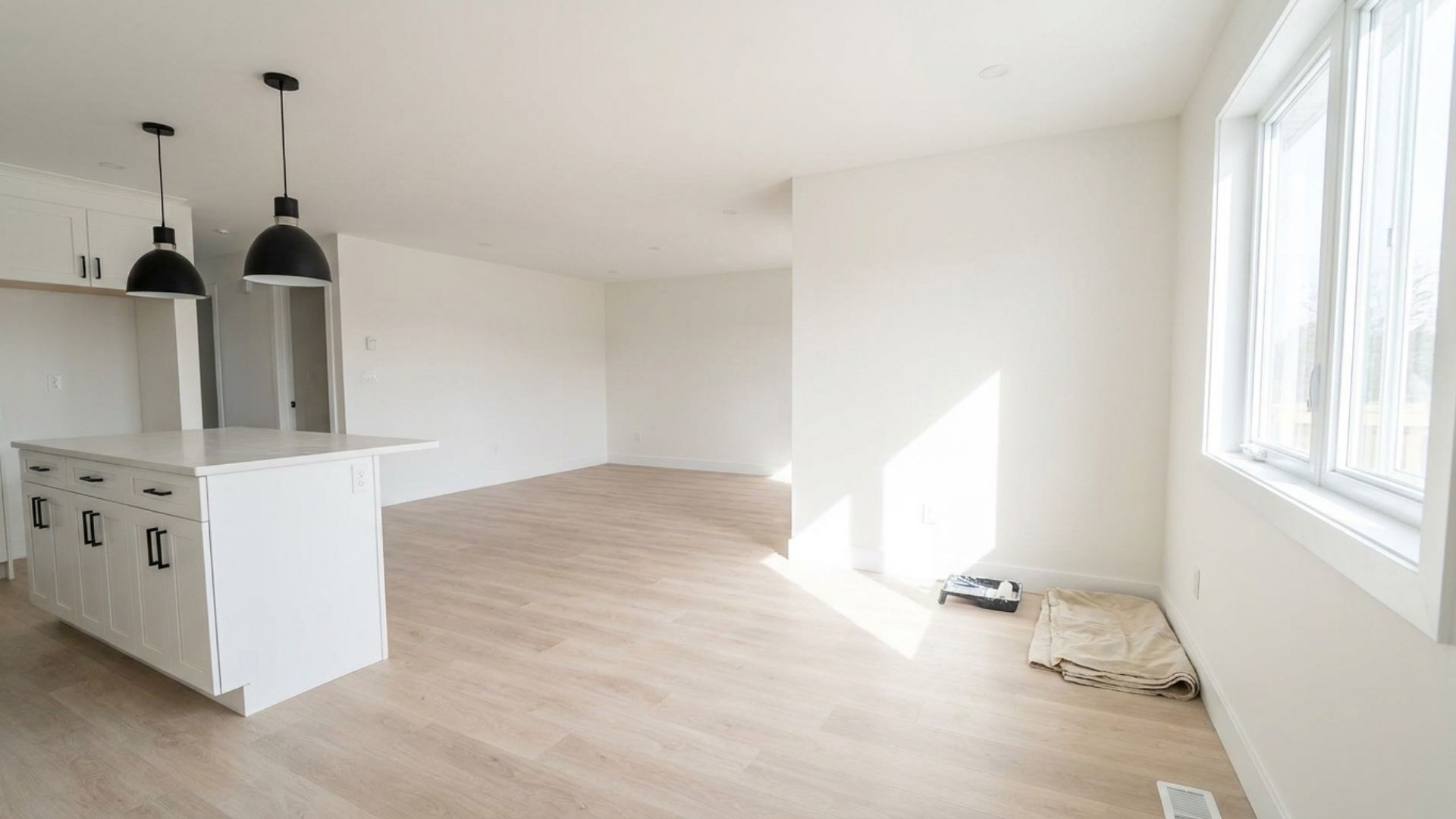
What Does a 30-Day Cosmetic Rehab Cost in Louisville?
Plan on about $25 a square foot, roughly $27,500, for a full cosmetic refresh on a typical 1,100 square foot Louisville house, and far less for a light one. A local investor's ballpark, what each tier covers, what it leaves out, and how it fits the $15 to $30 rule of thumb.
Plan on about $25 a square foot for a full cosmetic refresh, or roughly $27,500 on a typical three-bed, one-bath Louisville house of about 1,100 square feet. That's where my own finished projects land once everything is in. A light refresh that's essentially paint and flooring can come in far lower, around $11,300 on the same house. Both are ballparks, not quotes.
The spread between those two numbers is almost entirely the kitchen, the bath, how much flooring you replace, and the things you only find once the work starts. Here's what each tier covers.
Cosmetic means the house works and you're changing how it looks and feels, not how it functions. Paint, flooring, fixtures, hardware, a kitchen and bath refresh, and curb appeal. No new roof, no HVAC, no panel, no plumbing re-runs, no moving walls.
That distinction is the whole game. A cosmetic rehab is predictable because almost everything is visible. The minute a system is involved, you're in a different budget and usually a different timeline.
This is essentially a paint and flooring job, plus the small swaps that come with it. On the example house, the scope is:
- Full interior paint: walls, trim, and ceilings. This is the biggest piece of the budget.
- New carpet in the bedrooms.
- Kitchen cabinets painted with new hardware and a new kitchen faucet.
- Bath swaps: a new toilet and vanity faucet.
- Lighting and electrical trim: new light fixtures, outlets, and switches.
- The small stuff that adds up: interior door hardware, drywall patches, smoke and CO alarms, a new keyed entry set, landscaping cleanup, a light trashout, and a final clean.
That comes to about $11,300 with a 10 percent contingency, and it only holds on a house that's already in decent shape.
The full version keeps everything above and adds the pieces buyers notice first:
- LVP in the living areas, so the whole house has new flooring.
- Kitchen refresh: new countertops, a new sink, and a microwave or hood.
- Bath refresh: a new vanity and a tile tub surround. That surround is the biggest single swing item in a cosmetic bath.
- A few new interior doors and a new porch light.
On my own projects, a full cosmetic refresh on a house like this lands closer to $25 a square foot, about $27,500 all in. If you price only what you can count on a walkthrough, you'll come in under that every time. Treat the walkthrough list as the floor, not the finish.
The walkthrough list always comes in under the finish because of fix-as-you-go labor: trim, drywall, patches, and the small details you only see once the house is empty and the paint is going on. Those details are a big part of what helps a house sell faster and cleaner. The all-in number also carries a cushion for small extras and for the non-standard plumbing, layout, or breakage that turns up even on a cosmetic flip.
In an earlier post on how I estimate rehab costs on a flip, I gave $15 to $30 a square foot as my cosmetic gut check. A full refresh at about $25 sits in the upper half of that range, which is where most real cosmetic projects end up once the kitchen and bath get real attention. A truly light refresh can land under the range, but only on a house that needs very little.
The gut check comes from finished projects, which is why it runs higher than a walkthrough list. Use it to decide in five minutes whether a house is worth an hour. Then walk the scope, and expect the finished number to come in above the list. The rehab number also feeds straight into your offer when you calculate ARV and work backward.
This is the part that turns a cosmetic budget into a surprise:
- Systems. Roof, HVAC, water heater, the electrical panel, and plumbing are all outside a cosmetic scope. If any of them is at the end of its life, price it separately.
- Appliances beyond the microwave. A range, refrigerator, or dishwasher is its own line.
- Exterior paint, windows, and anything structural.
- Permits, holding costs, and utilities while the work happens. Those depend on the house and how you're financing it, so run your own.
A scope like this has no systems work and no inspections to wait on, so the trades can stack in a clean order: trashout and drywall patches, then paint, then cabinets and fixtures, then flooring last so it doesn't get beat up, then the final clean. On my projects, 30 days is the real timeline for a scope like this.
My estimates run through a fixed pricing engine that uses my costs the same way every time. AI helps me turn a walkthrough into a clean scope. It does not set the prices. That split is on purpose: a language model is good at organizing a conversation and bad at knowing what a tub surround costs in Louisville.
Is the low end of that range enough for a cosmetic rehab in Louisville? For a light refresh on a house in decent shape, it can be. For a full refresh with real kitchen and bath work, plan closer to $25 a square foot. Walk the actual scope before you commit, and leave room above it.
What's the biggest variable in a cosmetic budget? The kitchen and bath. Paint is the biggest single piece, but it's predictable. Countertops, a tub surround, and appliances are where two "cosmetic" rehabs on the same size house end up thousands apart.
Do I need a contingency on a cosmetic job? Yes. Both totals in this post include a cushion. Cosmetic work is predictable, not perfect. You'll find a soft spot, a bad outlet, or a door that won't hang.
What if I own a house that needs this work and I don't want to do it? That's exactly the kind of house we buy as-is. I'll give you a straight read either way, and if listing it makes more sense for you, I'll say so and connect you with an agent I'd recommend, whether you sell to me or not.
Written by Paul Cobb, CRG Holdings. These are ballparks, not quotes. The $25 a square foot figure reflects my own finished cosmetic projects, all in. The light-refresh total is for an example 1,100 square foot house and includes a 10 percent contingency. Your house, finishes, and contractors will change the numbers. This is not financial advice.
Share this post
Related Posts
Selling a House in Divorce: How Does It Work in Louisville?
Selling a house in a divorce works like any other sale, except two owners have to agree on every step. Here are the three paths in Kentucky and Indiana (list it, sell as-is for cash, or one spouse buys out the other) and how to tell which one fits.
What Does "We Buy Houses for Cash" Actually Mean, and What's the Catch?
A cash buyer purchases with their own funds, closes in days or weeks, and takes the house as-is. The catch is that you will almost always net less than listing on the open market. Here is the honest trade, what to ask before you sign, and when listing with an agent is the better call.
What Is ARV and How Do I Actually Calculate It?
ARV is what a property will sell for once the renovation is done. The concept is simple; the judgment calls are what make it hard. Here is how comps get picked, which adjustments actually move the number in Louisville, and where AI helps and where it will burn you.